Broodings
-
Screen door stonehenge
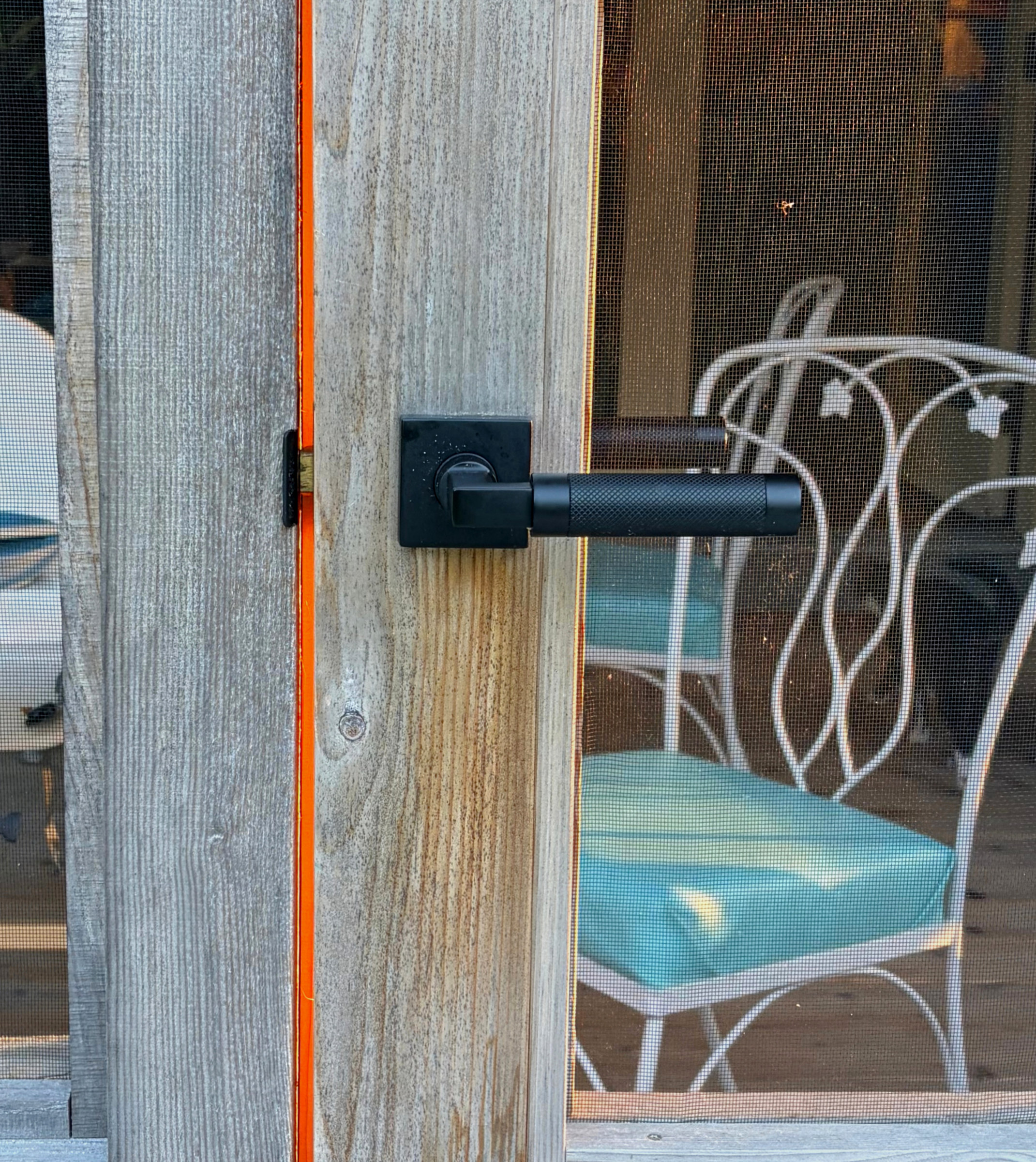
There can’t be more than a millimeter or two between the back of this door and the jam. And the setting sun falls on this spot through a few pockets in tree cover that is more open than the rest of the canopy only because it sits in a marsh. My cat and I were coming back from a walk in the yard and we chose the right second. I’ve been trying for several days now to catch it again but nothing. Perhaps it is a specific-distance-from-the-solstice thing only.
-
Small feet
I was rolling around in the underbrush a while back looking for some oak seedlings that I’d planted (and which I did not find) when I went under a robust shrub and found on the other side a kind of secret clearing—surrounded by dense thickets of young beech saplings and extending under the hefty trunk of a mostly-fallen oak. The oak had fallen a few years back along with about twenty other trees during a down-burst that lasted all of 90 seconds and that I remember shaking the walls of the house and thrumming the poorly sealed gaps in the closed windows while I listened to the pop pop pop of a whole community of canopy trees hitting the ground. This little clearing under the shrubbery looked like it was a clearing not entirely by happenstance but by virtue of being well trod—lots of small feet mashing down last year’s leaf litter. Up the slope on the other side of the fallen oak trunk a smooth track of flattened leaves snaked out into the thick brush.
A game trail for the smaller in stature! I came back with a trail cam and visions of moodily lit fishers and mink on midnight patrols—maybe even a crouching bobcat. It is several hundred videos later and while I suppose I cannot definitively say that none of those animals use the secret clearing trail, what I can say for sure is that I have discovered a porcupine superhighway. Or at least it is during the month of May. Porcupines at night, porcupines during the day, porcupines waddling and standing up and stopping to eat tree saplings, stopping to mark territory and then to intently smell where other porcupines have marked territory. Porcupines grunting, whining, and clacking their teeth and even a porcupine making a sprinter’s dash the likes of which I have never seen from the species before. And also porcupines standing up to give the quills a good thoughtful shake out before continuing on a slow but purposeful amble off into the night—with the kind of measured pace and steady bringing up the pads of the paws with each step forward that sends my lungs into a nice expansive breath and lets just a little tension out of my shoulders. The business of the world carries on in an infinite unseen corners.
-
Creek Fish
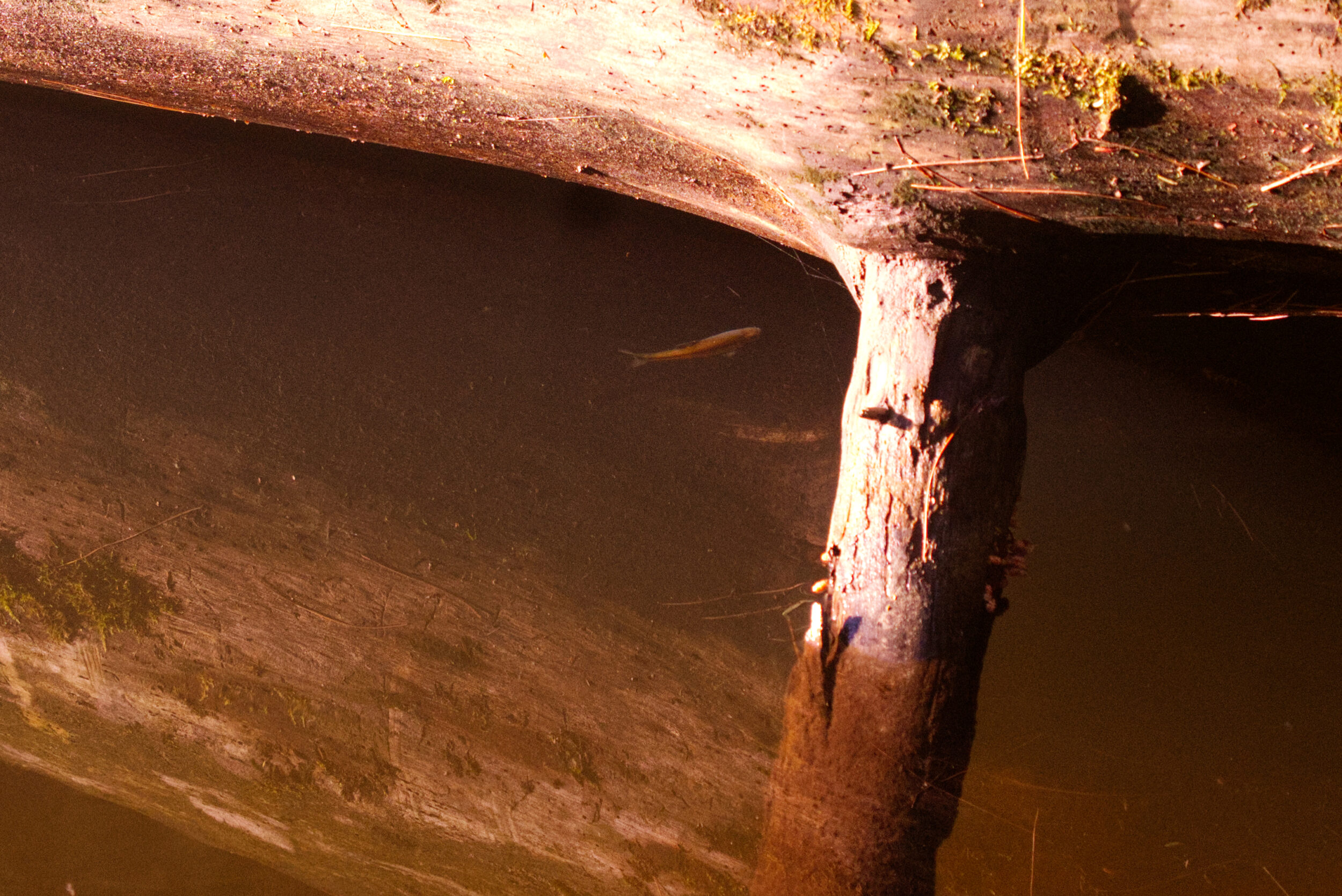
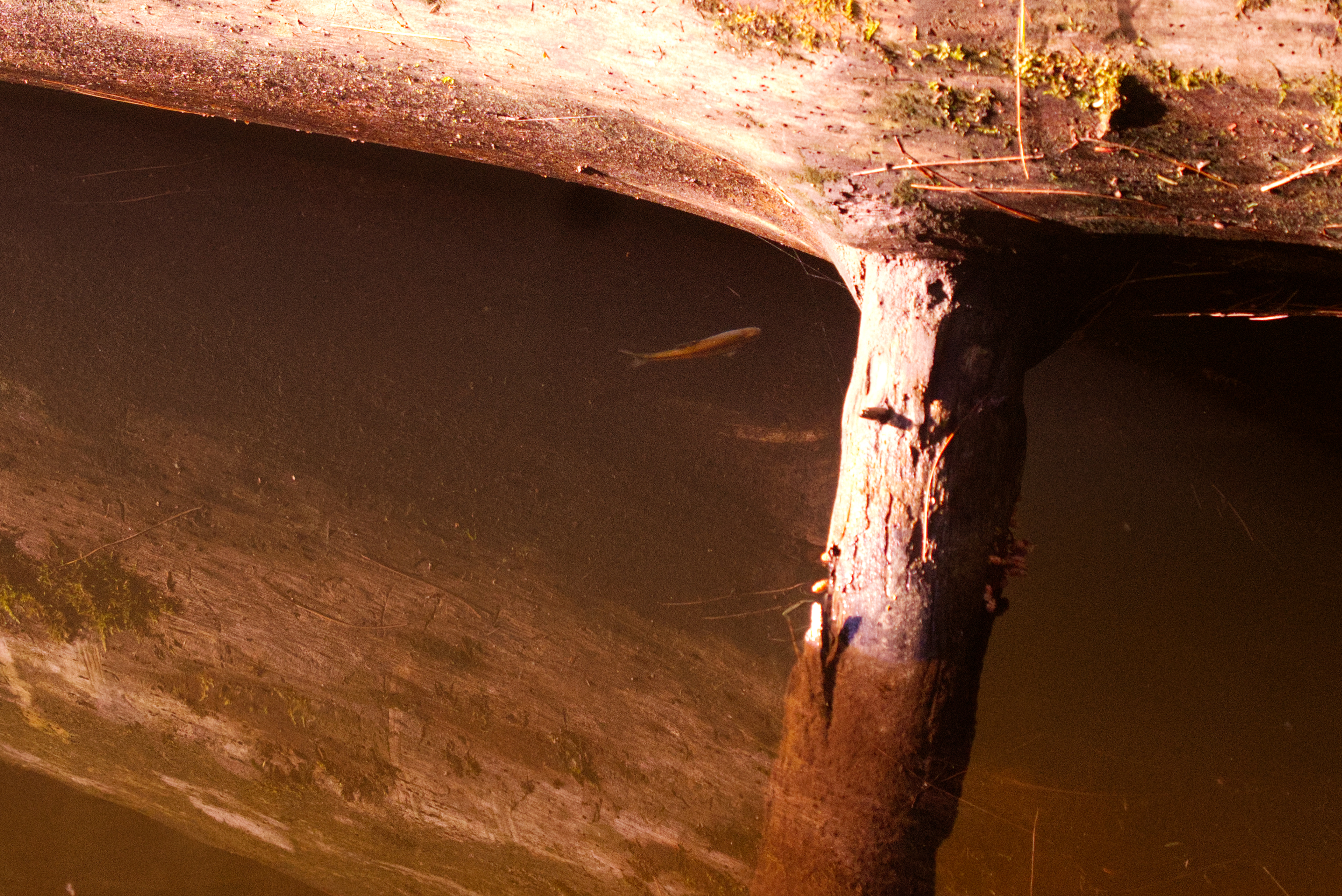
I call them shadow windows, when heavy glare on water is broken by a shadow on the surface. If the sun is low in the sky the water column might be illuminated all the way down, with just the surface darkened enough to allow clear viewing. If I can get close enough to a body of water I will often make one with my hands. In the window below this log a few minnows kept rising. For food at the surface? For food on the underside of the log? As a mating display? The fathead minnows are in full banded colors but I don’t yet have an ID on the this group, or any of the others.
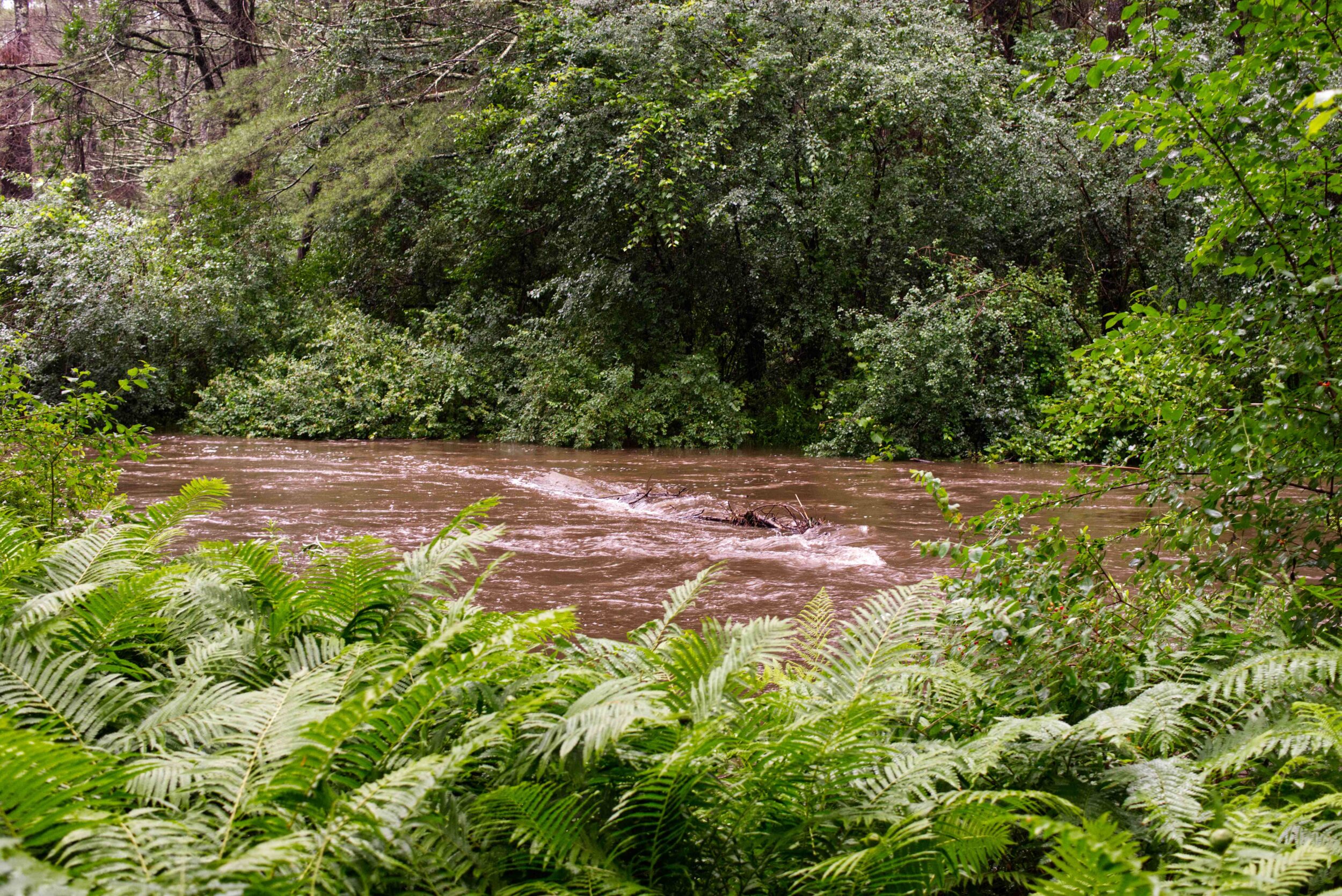
I have always been enamored with water because it is another world. I have always been enamored with creeks and ponds because they are miniaturized worlds, but in physical scale only. This minnow approached the surface with as much grandeur as any cutthroat or west slope rainbow. It was a mature bull shark coming up from 25 feet in clear water. When they would turn and sink—sometimes darting—back down I’d lose sight of them around the 6-inch mark. Such a small pool of water—several bathtubs worth below a leaky beaver dam. I try to come down every evening, picking my way through the tall ferns, to perch bank-side and see who appears in the little portals.
-
Sedge clump
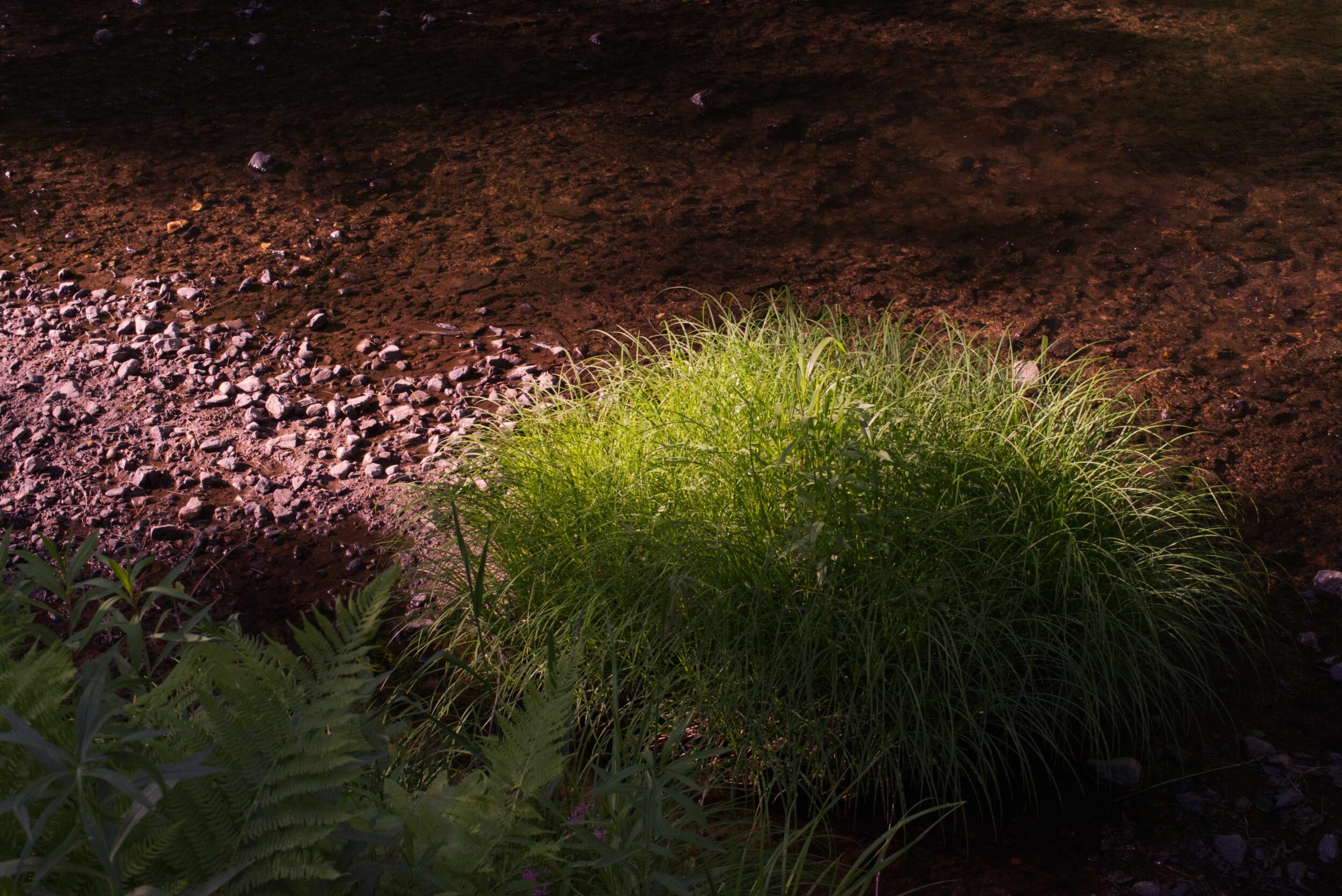
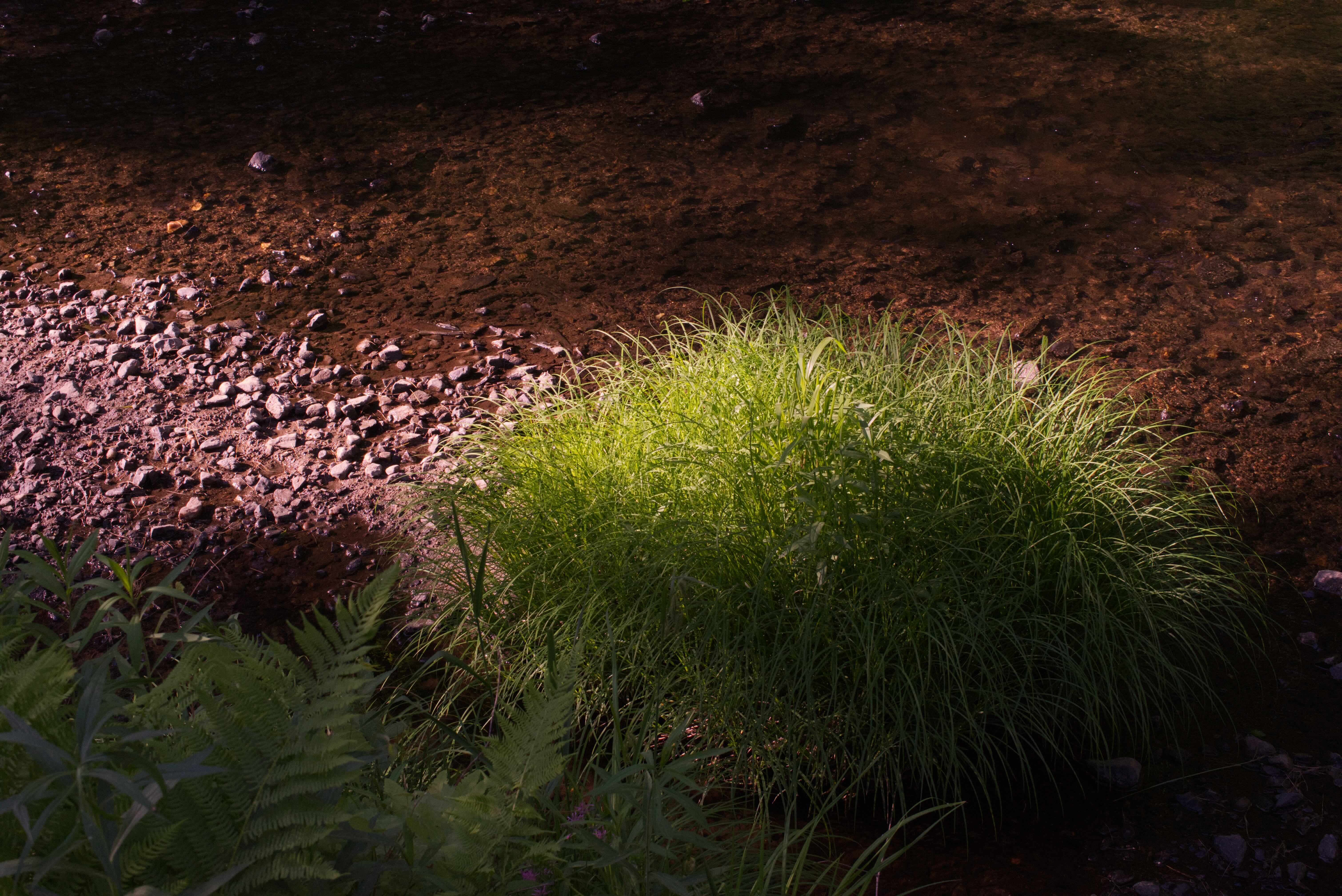
Little clumps of sedge all up and down the sides of the creek that are usually little rooted islands this time of year, all high and dry now instead.
-
Evening light
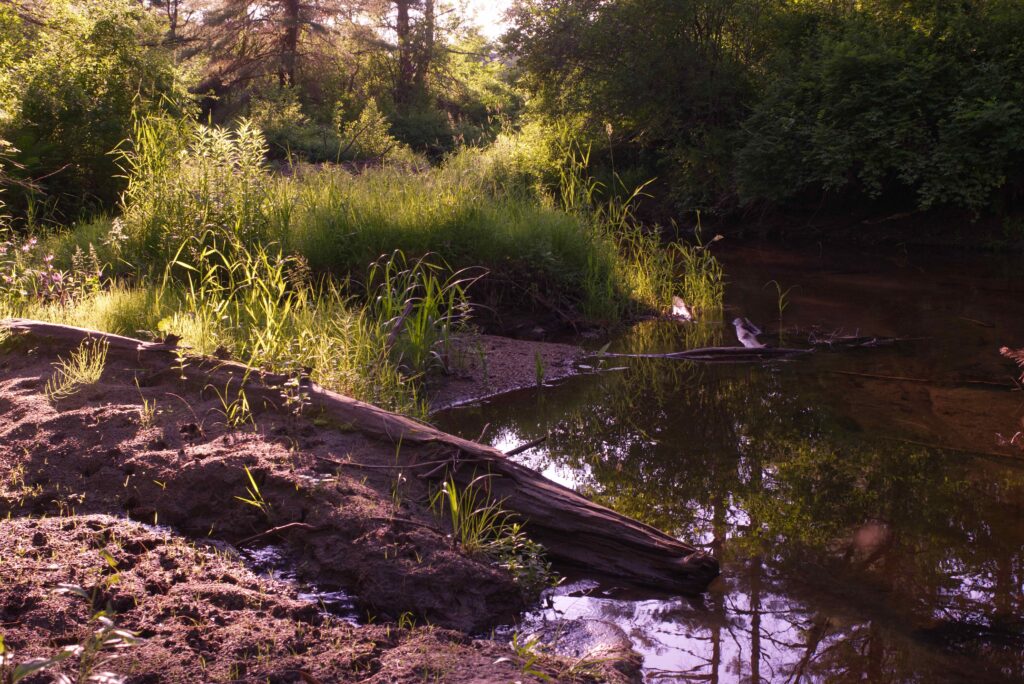
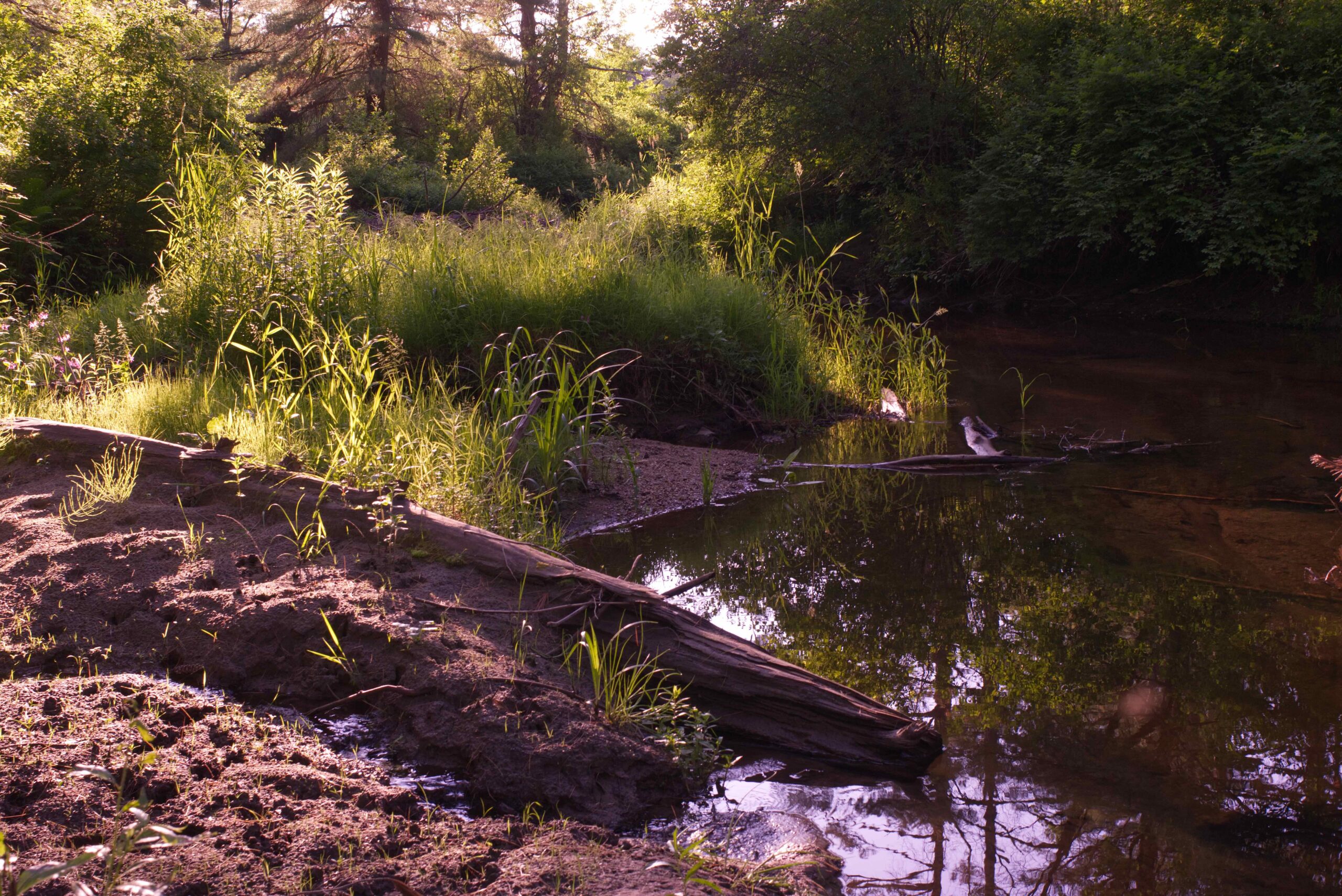
One of the things about living far from the equator is that much like an actor whose big monologue has come some places get spot-lit for just a small part of the year before receeding into the background. Some places get the super glow for two small windows—when the sun’s on the way out and when the sun’s on the way in—and others just rise slowly to one great crescendo, like this spot. This section of this creek has a few short straightaways that all orient in more or less the same direction and they are all afire during evenings in the month of June.
-
Wasp on sarsparilla
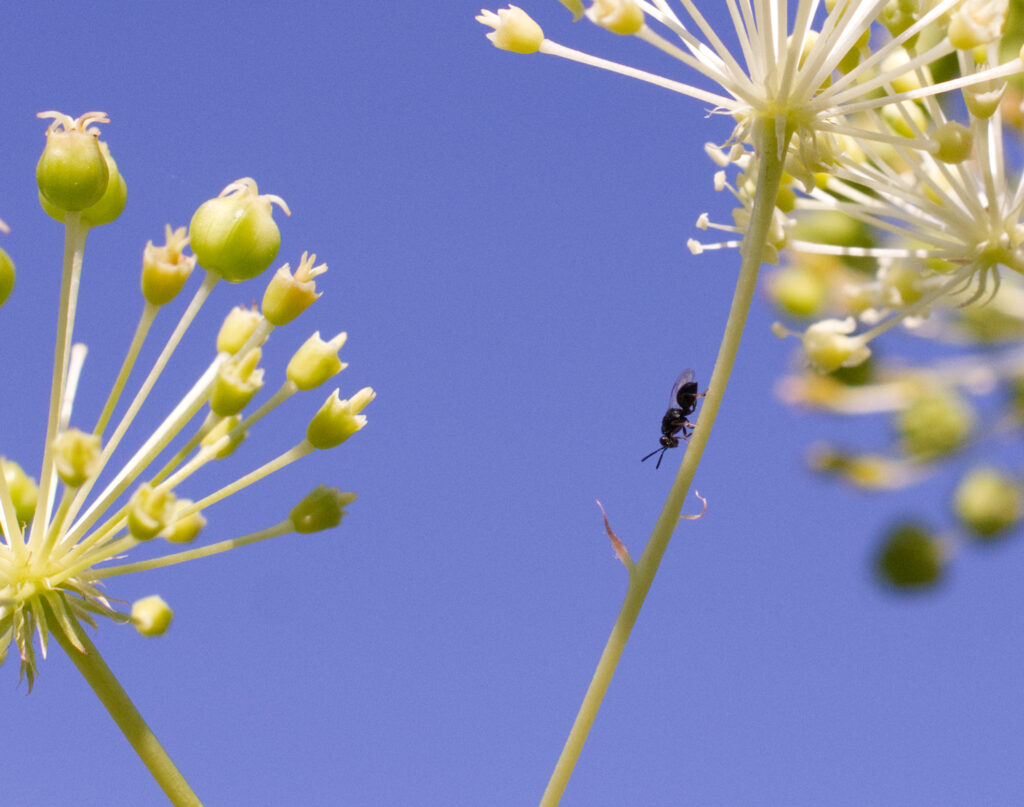
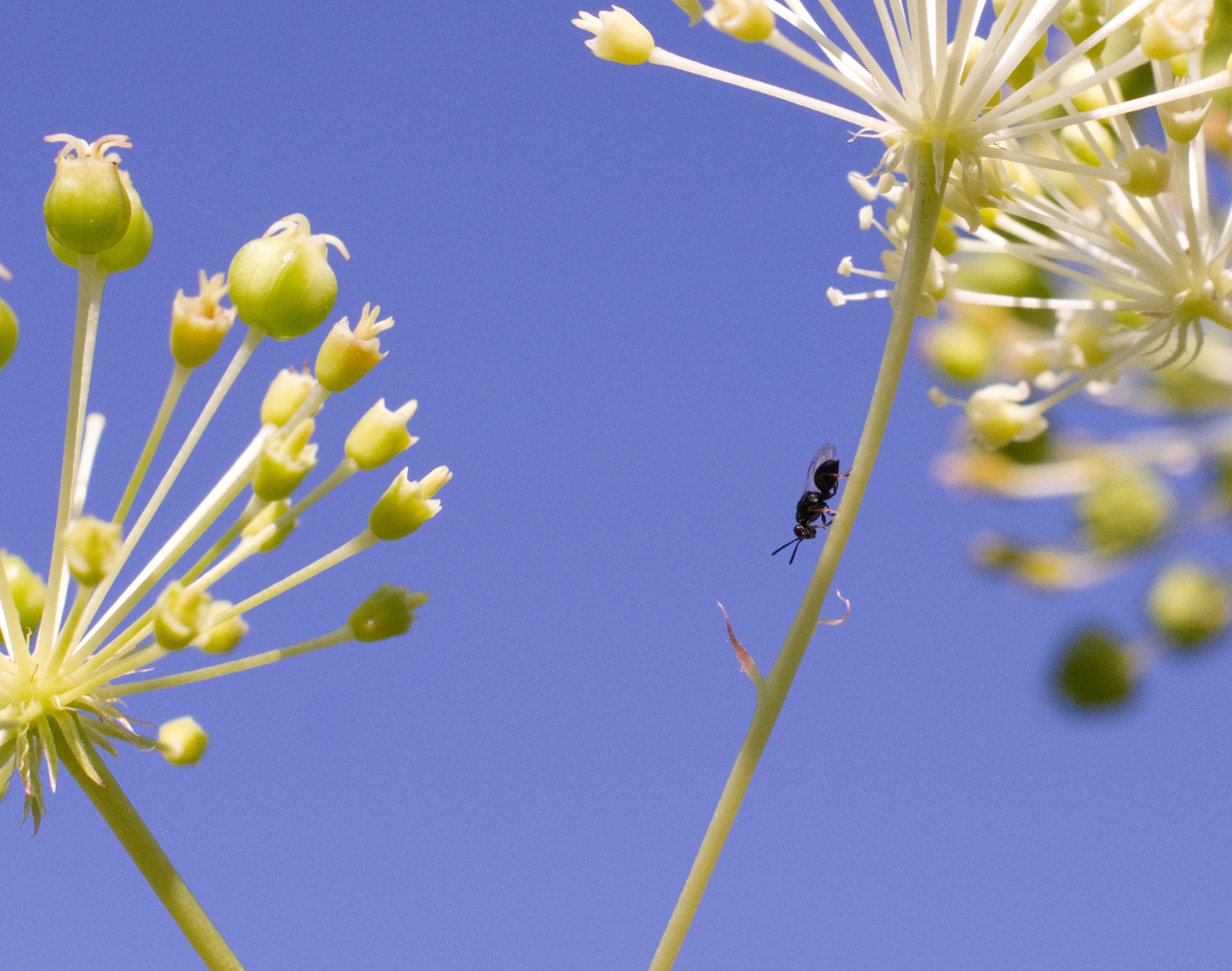
A wee wasp walking down the pedicel of a bristly sarsparilla flower on a June day with a very clear sky.